
Lifestyle investments: why sports infrastructure has become a new driver of Spain’s real estate market
Reading time: ~2 minutes
Just a few years ago, having a golf course next to a residential development was considered an attractive bonus. Today, it has become a genuine investment factor.
Buyers of premium real estate no longer evaluate only the property itself—they also assess the environment that will help preserve and enhance the asset’s value over time. As a result, golf courses, padel clubs, marinas, tennis academies, and wellness facilities are no longer simply lifestyle amenities; they have become part of a long-term investment strategy.

Spain: a global leader in sports infrastructure
Spain has firmly established itself as one of Europe’s leading destinations for sports-oriented real estate.
Today, the country is home to:
• More than 430 golf courses — the largest network in continental Europe.
• Around 17,000 padel courts — the world’s largest padel infrastructure.
• More than 6 million padel players, with the number of new clubs continuing to grow.
Thanks to Spain’s mild climate, outdoor sports can be enjoyed throughout most of the year. This translates into stronger demand for residential property—not only for holiday homes, but also for permanent residences and long-term rentals.
Buyers are investing in a lifestyle, not just square metres
In the premium segment, purchasing decisions are increasingly driven by the quality of the surrounding environment rather than the property’s specifications alone.
Today’s buyers value:
• Year-round access to sports and outdoor activities.
• Secure, gated residential communities.
• Privacy and low-density developments.
• Well-developed local infrastructure.
• A strong international community.
These locations consistently demonstrate higher liquidity and more resilient demand, even during periods of market uncertainty.
Padel: a new real estate investment asset
While golf has long been associated with luxury real estate, padel has emerged as one of the most promising investment sectors in 2026.
According to a joint study by PwC and Playtomic, modern padel clubs possess several characteristics that make them particularly attractive to institutional investors:
• High court occupancy rates.
• Stable and recurring revenue streams.
• Predictable operating models.
• Payback periods of approximately three years.
The ability to increase the attractiveness of residential, hospitality, and mixed-use developments.
Today, padel clubs are increasingly viewed as standalone commercial real estate assets rather than simply an additional amenity within residential projects.
How residential developments are evolving
Not long ago, a swimming pool was considered the defining feature of a premium development.
Today, buyer expectations have evolved. Premium residential projects increasingly include:
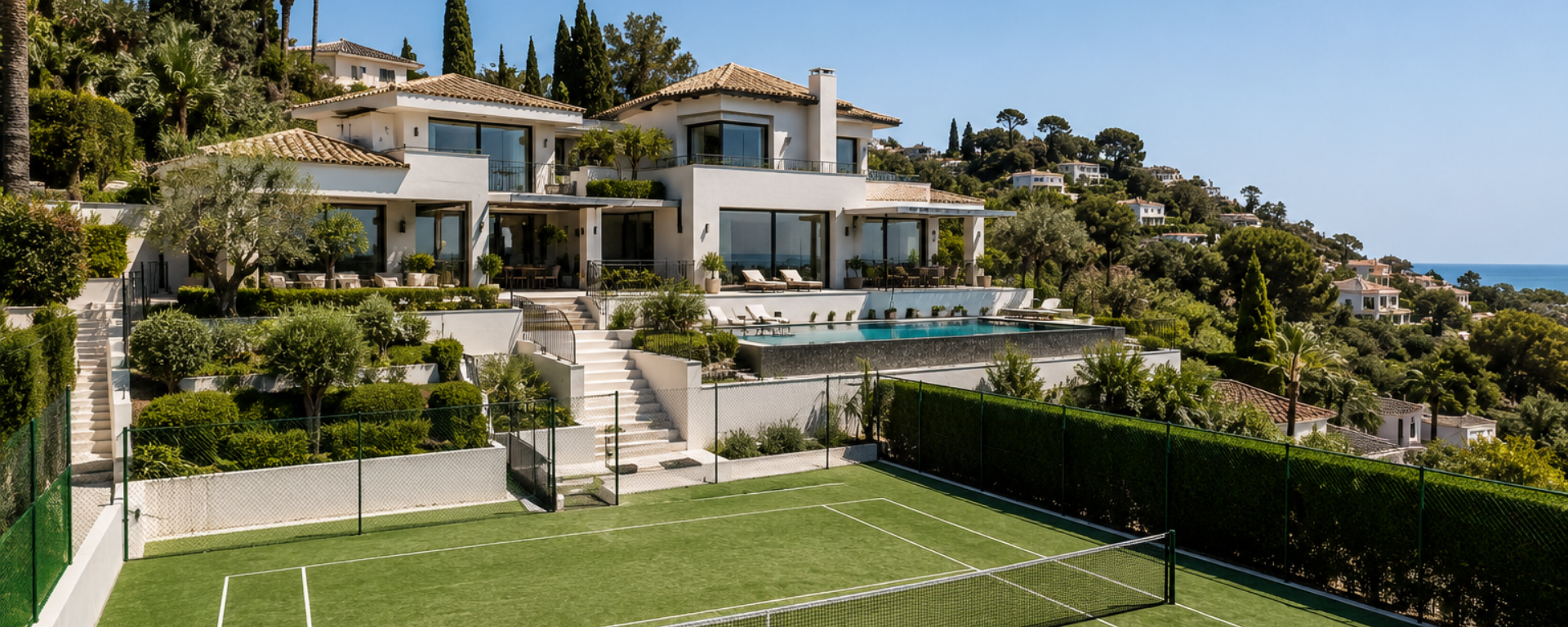
• Padel courts.
• Fitness centres.
• Outdoor training areas.
• Cycling routes.
• Wellness facilities.
• Community spaces designed for active lifestyles.
This type of infrastructure enhances the appeal of developments for both owner-occupiers and investors targeting the rental market.
Why Catalonia stands out
This trend is particularly significant in Catalonia.
Barcelona combines international business opportunities, excellent transport connections, world-class healthcare and education, and access to outstanding sports infrastructure.
Meanwhile, the Costa Brava offers a different lifestyle: privacy, modern residential communities, marinas, championship golf courses, and the opportunity to enjoy coastal living all year round.
For many international buyers, these properties represent more than just a home. They serve simultaneously as a second residence, an investment asset, and a long-term wealth preservation strategy.
What this means for investors
Price per square metre remains an important metric—but it is no longer the only one.
Today, the long-term value of a property increasingly depends on three key questions:
• Will the area continue to develop over the next 10–15 years?
• Will the surrounding infrastructure continue to improve?
• Will the location maintain strong demand regardless of market cycles?
For this reason, investing in premium real estate increasingly begins not with selecting a property, but with selecting the right location.
Ultimately, it is the surrounding environment, infrastructure, and overall quality of life that define a property’s long-term investment potential.