
Spain among Europe’s fastest-growing economies: what it means for the real estate market
Reading time: ~2 minutes
Spain continues to outperform the eurozone’s largest economies. In October 2026, the International Monetary Fund (IMF) once again upgraded its forecast for Spanish GDP growth, confirming the resilience of the country’s economy against a backdrop of more subdued growth across Europe.
For the real estate market, this is a significant indicator: economic expansion is accompanied by rising employment, population growth, and stronger domestic demand, creating favourable conditions for both residential and commercial property.
Spain is growing faster than its european neighbours
According to the IMF’s October forecast, Spain’s economy is expected to grow by 2.9% in 2026, significantly outpacing the projected growth rate for the eurozone.
By comparison, Germany’s economy is forecast to grow by approximately 1%, France’s by 0.9%, and Italy’s by 0.5%.
Spain therefore maintains its position as the fastest-growing of the eurozone’s four largest economies. The IMF also expects Spanish GDP to continue expanding in 2027, albeit at a more moderate pace.
What is driving spain’s economic growth?
Several factors are supporting Spain’s economic performance.
First, domestic consumption continues to increase. According to the Spanish National Statistics Institute (INE), the country’s population reached a record 49.8 million people by mid-2026. Population growth supports demand for goods, services, and real estate.
The second factor is the labour market. Rising employment and an expanding working-age population are contributing to growth in services, retail, construction, and professional activities.
Tourism, international investment, and European funding programmes aimed at modernising infrastructure and improving productivity provide additional support.
At the same time, Spain’s economy is becoming less dependent on tourism alone, with technology, professional services, and international business playing an increasingly important role.
How economic growth affects real estate
Spain’s economic resilience is reflected in its property market. Rising employment and population growth are increasing housing demand, while supply remains constrained.
According to INE, residential property prices in Spain rose by 12.2% year on year in the second quarter of 2026. Prices for existing homes increased by 12.9%, while new-build properties recorded growth of 7.4%.
Investor interest in commercial real estate also remains strong. According to CBRE, real estate investment in Spain exceeded €12 billion in the first half of 2026, representing a 59% increase compared with the same period of the previous year.
For investors, these figures highlight the attractiveness of the Spanish market. However, rapid price growth also makes a thorough assessment of acquisition costs and potential future returns increasingly important.

Barcelona and Catalonia in the investment spotlight
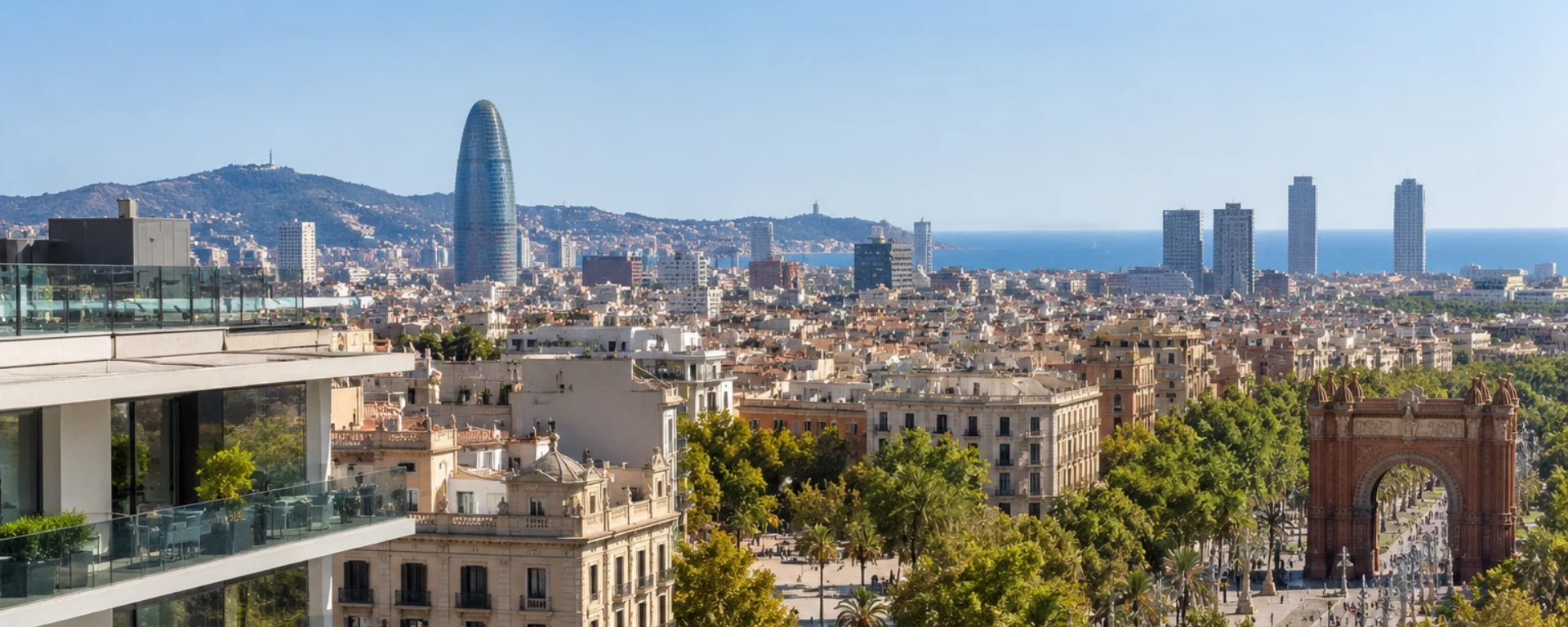
Barcelona occupies a distinctive position within Spain’s economic landscape. International business, the technology sector, tourism, and well-developed infrastructure generate demand for both residential and commercial property.
Investment opportunities extend beyond apartments in the city’s most sought-after neighbourhoods to include tenanted commercial properties, hospitality assets, new-build developments, and coastal real estate across Catalonia.
At Estate Barcelona, we view economic growth as an important fundamental factor, but not as a guarantee of investment returns. When selecting a property, the decisive considerations remain its location, asset quality, legal due diligence, actual market demand, and potential for capital appreciation.
Spain continues to demonstrate strong economic performance within Europe, creating opportunities for investors who approach the market with professional expertise and a carefully considered strategy.